
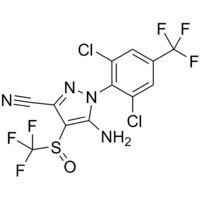
 |
Versatile Crop Protection Fipronil provides reliable pest control for a wide range of crops including rice, sugarcane, maize, and cotton. Its targeted action against insects such as termites, fleas, and locusts makes it a dependable solution for farmers aiming to safeguard crop yields. Ease of Application and Formulation Available as Suspension Concentrate (SC) and Emulsifiable Concentrate (EC) in liquid form, Fipronil can be conveniently applied by spraying. Its optimum efficacy is achieved when diluted at 5-15 ml per liter of water, ensuring precise and uniform pest control in the field. Safe Storage and Extended Shelf Life Packaged in sturdy plastic bottles and cans, Fipronil is designed for long-term stability, boasting a shelf life of up to two years. For best results, it is recommended to store the product in a cool, dry environment, preserving its controlled release and insecticidal effectiveness. FAQ's of Fipronil:Q: How should Fipronil be applied to crops for effective pest control?A: Fipronil should be diluted at a rate of 5-15 ml per liter of water and applied using a spray method, ensuring even coverage of target crops such as rice, sugarcane, maize, and cotton to effectively control pests.Q: What types of pests does Fipronil target?A: Fipronil is effective against a range of pests including termites, fleas, and locusts, providing broad-spectrum protection for various agricultural crops.Q: When is the best time to apply Fipronil on crops?A: It is recommended to apply Fipronil at the early stages of pest infestation or as soon as pests are observed, ensuring maximum control and minimizing crop damage.Q: Where should Fipronil be stored to maintain its effectiveness?A: Fipronil should be stored in its original plastic bottle or can in a cool, dry place, away from direct sunlight or moisture, which helps preserve its quality and shelf life.Q: What is the process for preparing Fipronil spray solution?A: To prepare the Fipronil solution, measure the recommended dosage (5-15 ml per liter of water), mix thoroughly, and use immediately for spraying on infested areas to ensure best results.Q: What are the benefits of using Fipronil as an insecticide?A: Fipronil offers controlled release action, reliable pest control, odorless application, and effective protection for key crops, ultimately supporting higher crop yields and better pest management.Q: Can Fipronil be used on all types of crops?A: Fipronil is specifically formulated for use on rice, sugarcane, maize, and cotton. For application on other crop types, consult an agricultural specialist or follow label recommendations. |
 |
Copyright © 2026-27 by Kalyani Industries Ltd. All Rights Reserved. | Design & Developed By: tradeindia.com | Sitemap | XML | RSS
