
 |
||||||||
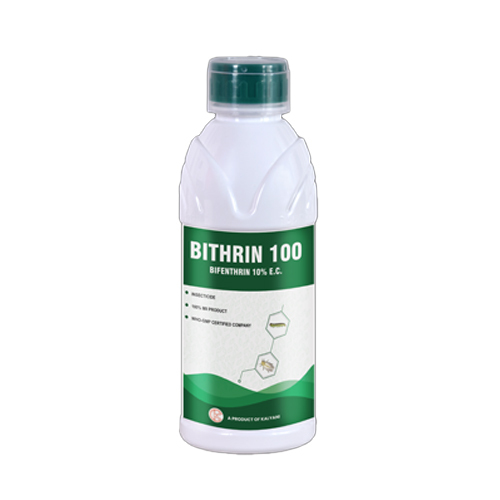
Bifenthrin 10 % EC
Features:
Product details
Specification:
Antidote: Treat symtomatically Key Features of Bifenthrin 10% EC Bifenthrin 10% EC offers robust protection against a range of agricultural pests. Emulsifiable in water, it is easy to apply and mixes well with most other insecticides and fungicides. Packaged in HDPE bottles, it remains effective for up to two years under recommended storage conditions. Its mild characteristic odor and controlled release type make it an efficient choice for both large-scale and small-scale farming. Optimal Usage and Application Process This insecticide is best applied at a dosage of 80 gm a.i/ha, diluted in water and sprayed directly on target crops. For uniform results, apply during pest outbreaks or as part of a regular pest management program. Suitable for cotton, rice, vegetables, fruits, and ornamental plants, it acts swiftly on pests through both contact and ingestion. Storage and Safety Measures Bifenthrin 10% EC should always be stored in original, tightly sealed containers in a cool, dry, and well-ventilated area, away from direct sunlight and food items. Moderately hazardous (Class II), users must wear appropriate personal protective equipment during handling and application to ensure safe and responsible use. FAQ's of Bifenthrin 10 % EC:Q: How should Bifenthrin 10% EC be applied to crops for optimal results?A: To achieve the best outcomes, dilute Bifenthrin 10% EC in water as per the recommended dosage (80 gm a.i/ha) and apply it as a foliar spray, ensuring even coverage on the crops during periods of active pest infestation.Q: What pests does Bifenthrin 10% EC control and on which crops can it be used?A: Bifenthrin 10% EC targets bollworms, stem borers, leaf folders, thrips, and mites, and is effective on cotton, rice, vegetables, fruits, and ornamental plants.Q: When is the ideal time to apply Bifenthrin 10% EC for maximum pest control?A: It is most effective when applied at the onset or during the early stages of pest outbreak, as part of a regular integrated pest management (IPM) schedule.Q: Where should Bifenthrin 10% EC be stored to ensure its longevity and effectiveness?A: Always keep the product in a cool, dry, and well-ventilated place, away from direct sunlight, heat sources, and foodstuffs. Store only in its original HDPE packaging.Q: What is the process for mixing Bifenthrin 10% EC with other agrochemicals?A: Bifenthrin 10% EC is compatible with most common insecticides and fungicides. Always perform a compatibility test when mixing for the first time, and follow label instructions for safe and effective mixing.Q: What are the benefits of using Bifenthrin 10% EC in pest management programs?A: This product provides broad-spectrum pest control with quick knockdown through contact and ingestion. Its controlled release enhances performance while its compatibility offers versatility in integrated pest management strategies.Q: Is Bifenthrin 10% EC safe to use and what precautions should be taken during application?A: Bifenthrin 10% EC is classified as moderately hazardous (Class II). Always use personal protective equipment while handling and avoid contact with skin or eyes, and do not allow drift onto food crops not intended for treatment. |
||||||||
 |
Copyright © 2026-27 by Kalyani Industries Ltd. All Rights Reserved. | Design & Developed By: tradeindia.com | Sitemap | XML | RSS
