
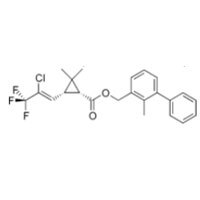
 |
Broad-Spectrum Protection for Crops Bifenthrin delivers robust insect control for a wide range of crops, including cotton, corn, soybeans, and vegetables. With its reliable action against aphids, mites, beetles, and whiteflies, it helps safeguard yields during critical growth stages. Its controlled release formulation ensures extended residual activity for ongoing crop defense. Versatile Formulations and Easy Application Offered in both Emulsifiable Concentrate (EC) and Suspension Concentrate (SC) forms, Bifenthrin is tailored to different agricultural needs. The liquid formulations are designed for easy, uniform spray application, compatible with standard agricultural sprayers. Consult the label to determine the most suitable formulation and dosage for your target pests. Safe Handling and Storage Safety is paramount with Bifenthrin. Store the product in its original plastic or metal containers, away from direct sunlight in a cool, dry place. Always follow manufacturer safety and dosage guidelines to ensure optimal results and reduce environmental impact. Bifenthrin offers a shelf life of up to 2 years if stored as recommended. FAQ's of Bifenthrin:Q: How should I apply Bifenthrin to my crops for effective insect control?A: Bifenthrin should be applied using a standard agricultural spray method, ensuring even coverage on affected crops. Always refer to the manufacturer's instructions for the correct dosage and application frequency based on the targeted pest and crop type.Q: What crops can benefit from the use of Bifenthrin insecticide?A: Bifenthrin is suitable for a variety of crops such as cotton, corn, soybeans, and vegetables. It targets pests like aphids, mites, beetles, and whiteflies, helping improve crop quality and yield.Q: When is the best time to use Bifenthrin on the field?A: Bifenthrin is most effective when applied at the early sign of pest infestation, ensuring proactive pest management. Follow local agricultural guidelines and monitor crops regularly to time the application for optimal protection.Q: Where should Bifenthrin be stored for maximum shelf life?A: Store Bifenthrin in its original plastic or metal container, in a cool, dry place away from sunlight and moisture. Proper storage can maintain its effectiveness for up to 2 years.Q: What is the process for mixing and preparing Bifenthrin for application?A: For EC or SC formulations, mix the specified dosage of Bifenthrin with water or a suitable organic solvent as directed on the label. Stir or shake to achieve a uniform emulsion or suspension before loading it into the sprayer.Q: What are the main benefits of using Bifenthrin over other insecticides?A: Bifenthrin provides broad-spectrum, residual control through a controlled release mechanism. Its efficacy on a wide range of pests, compatibility with various crops, and multiple formulation options make it a versatile and cost-effective solution for farmers. |
 |
Copyright © 2026-27 by Kalyani Industries Ltd. All Rights Reserved. | Design & Developed By: tradeindia.com | Sitemap | XML | RSS
